In the world of precision component manufacturing, CNC machining often takes center stage. However, for OEMs and engineers designing complex industrial equipment, the true efficiency and reliability often lie in selecting a manufacturing partner that masters the entire process chain—from forming the base component to final assembly.
In the world of precision component manufacturing, CNC machining often takes center stage. However, for OEMs and engineers designing complex industrial equipment, the true efficiency and reliability often lie in selecting a manufacturing partner that masters the entire process chain—from forming the base component to final assembly. At Shandong Apex Precision Machinery, the seamless integration of casting, welding, and machining within our facility provides a foundational advantage, particularly for large, complex, or high-value components. This blog delves into why this integrated approach is critical for success in industries like engineering machinery, automotive, and automation.
1. The Strategic Advantage of an Integrated “One-Stop-Shop.”
For global customers, managing multiple suppliers for casting, welding, and machining introduces significant challenges: extended lead times, communication gaps, quality inconsistencies, and increased logistical costs. An integrated manufacturing solution consolidates this chain, offering unparalleled benefits :
Single Point of Accountability: You have one team responsible for the entire process, from reviewing the initial design to delivering the finished part. This simplifies communication and ensures quality consistency across all stages.
Reduced Total Lead Time: Eliminating the need to transport castings or weldments between different vendors significantly shortens the production cycle. For instance, a cast housing can move directly from our foundry to our machining center without delay.
Design for Manufacturability (DFM) Synergy: Our engineers can evaluate a design with the entire process in mind. They might suggest a slight casting modification to reduce welding complexity or recommend a specific welding technique that minimizes distortion before final machining, ensuring optimal quality and cost-effectiveness.
Enhanced Quality Traceability: With all processes under one roof, we maintain complete traceability of the material and processing history for each component, which is crucial for industries with strict quality and safety standards.
2. The Foundational Role of Casting Services
Casting is the art of creating complex metal parts by pouring molten metal into a pre-designed mold. It is exceptionally adept at producing near-net-shape components with intricate geometries that would be costly or impossible to achieve solely through machiningalone.
Creating the Foundation: Our casting services provide the initial rough form of a component. A great example is a pump housing or a valve body. Casting can efficiently form the complex internal passages and chambers, which are then precision-machined to achieve final dimensions and surface finish.
Material Expertise: We work with a range of castable alloys, including gray and ductile irons, as well as aluminum, selecting the best material based on the component’s requirements for strength, weight, and corrosion resistance.
Cost and Weight Efficiency: By starting with a casting, we minimize the amount of raw material that needs to be removed during machining, reducing both material waste and machining hours. This leads to significant cost savings, especially for medium to high-volume production.
3. The Unifying Power of Professional Welding Services
Welding is the strategic process of joining metal parts using heat and/or pressure, creating a permanent, high-strength bond. In an integrated manufacturing context, welding unlocks several key capabilities :
Fabricating Large Structures: For large-scale frames, bases, or enclosures for industrial machinery and automation equipment, it is often impractical or impossible to cast as a single piece. We fabricate these structures by welding smaller, more manageable cast or forged sections together.
Repair and Modification: Integrated welding capabilities are invaluable for repairing casting defects or modifying existing components, saving time and resources compared to remanufacturing a part from scratch .
Multi-Material Designs: Welding allows for the combination of different materials within a single assembly. For example, a wear-resistant surface can be welded to a tough, structural base material to create a component with superior performance.
4. The Apex Precision Approach: A Seamlessly Integrated Workflow
Our strength lies in controlling and synchronizing these processes. Here’s how we ensure a seamless flow for your projects:
Collaborative Design Review: Our engineering team collaborates with you from the outset. We analyze the 3D model to determine the most efficient manufacturing strategy—deciding which features are best achieved through casting, which parts need welding, and where precision machining is critical.
In-House Casting and Welding: The component is cast in our foundry using controlled processes to minimize internal defects. If welding is required, our certified welders, equipped with MIG, TIG, and Arc welding capabilities, perform the work under strict procedures to control heat input and prevent distortion.
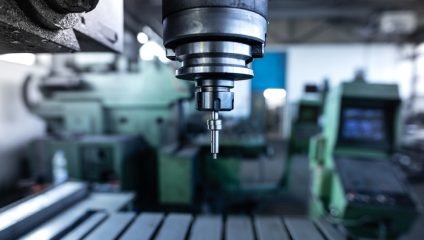
Precision Machining as the Final Step: The cast or welded part then moves to our CNC machining department. With the part’s geometry already established, our 3, 4, and 5-axis machining centers perform the final precision operations, achieving the tight tolerances and fine surface finishes required for optimal performance.
Unified Quality Assurance: The part undergoes a final quality inspection against the original drawing, verifying that the integrated process has met all dimensional, geometric, and material specifications.
5. Why Choose a Partner with Integrated Capabilities?
Choosing a manufacturer like Shandong Apex Precision, which masters all three disciplines, translates to tangible business benefits:
Risk Mitigation: Integrated process control reduces the risks associated with multi-vendor production, such as miscommunication and quality disputes.
Superior Cost Control: By optimizing the entire manufacturing sequence, we eliminate redundant steps and minimize waste, offering you a more competitive total cost.
Guaranteed On-Time Delivery: With all processes under one roof, we have direct control over the production schedule, enabling us to meet your deadlines.
In summary, while advanced machining is vital, integrating casting and welding provides the foundational strength and design flexibility required for today’s most demanding industrial components. This holistic approach ensures that your projects are not only built to precision but are also delivered with greater efficiency and reliability.